
From Industrial Challenges to Production-Ready Solutions
In industry, development creates value when it transforms a real need into a solution that is practical, repeatable, and ready for production. From this perspective, R&D is not limited to designing a new product or conducting research. It is a structured process that brings together market needs, manufacturing challenges, material characteristics, product design, production processes, testing, and real-world manufacturing data.
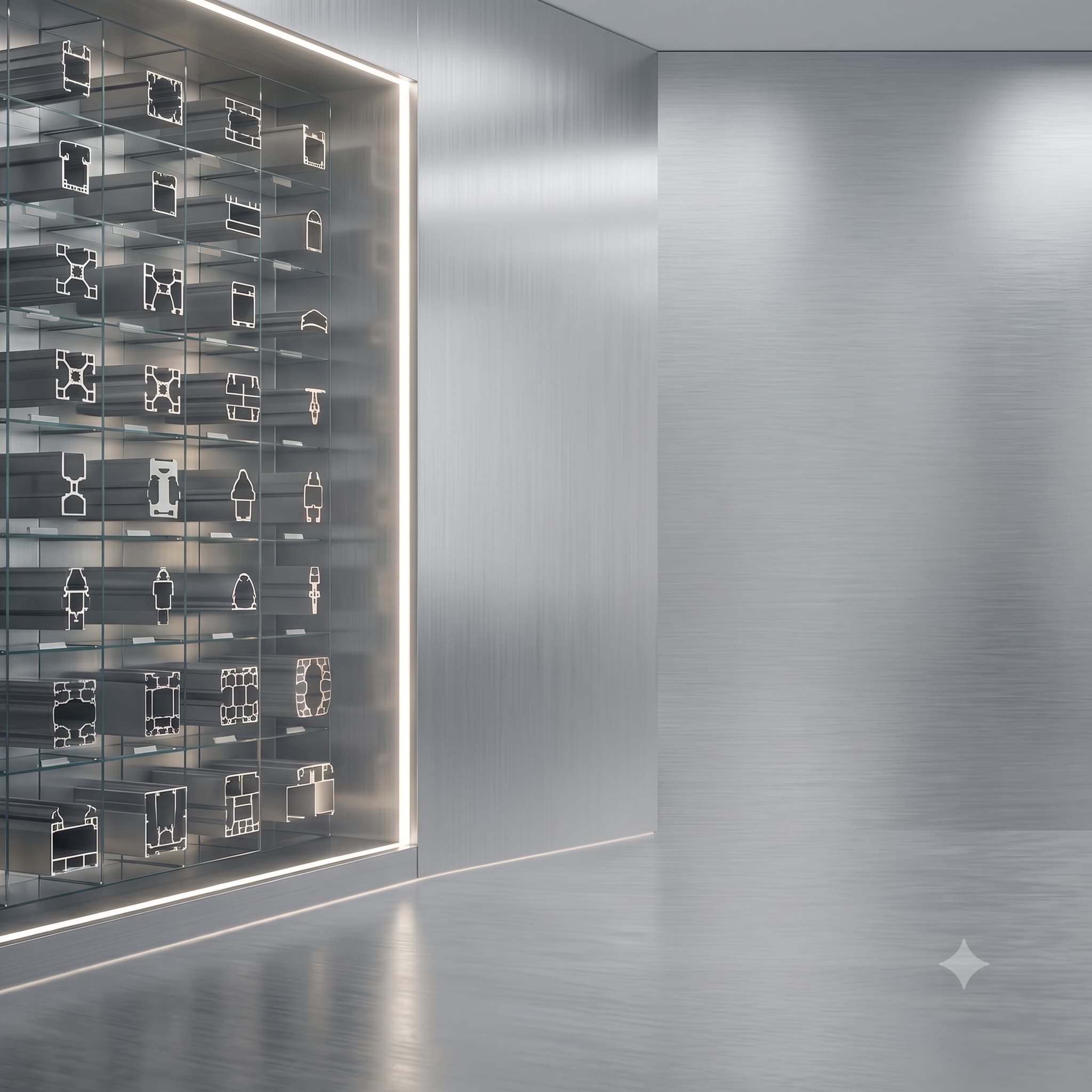
At Apadana Dian Industrial Group, R&D spans multiple areas of the industrial value chain, reflecting the diversity of the Group’s operations. These activities range from the development and optimization of aluminum processes and engineered profile design to heat exchanger development, forging and die engineering, automotive component design, and manufacturing process improvement.
The objective is to develop products and processes that not only meet technical requirements but can also be implemented, controlled, and consistently reproduced under real production conditions.
Quick Link
Jump directly to key sections of this article for a faster overview.
Explore Our Capabilities
Discover Apadana Diyan’s integrated manufacturing capabilities, engineering expertise and industrial solutions.
Product Requirement Definition
New Design & Reverse Engineering
Manufacturing-Oriented Development
Industrial Prototype Readiness
Where Does R&D Begin?
Not every development project starts with a new idea. Sometimes the starting point is a manufacturing problem, a change in customer requirements, a process limitation, increased scrap, a change in product properties, or the need to improve component performance.
The first step is therefore to examine the issue from multiple perspectives, including technical specifications, raw materials, manufacturing processes, performance requirements, equipment limitations, cost, quality, and production feasibility.
This stage ensures that the problem is clearly defined before moving into design and manufacturing. As a result, R&D progresses around a specific and measurable challenge rather than relying on fragmented trial and error.
When the Challenge Lies in Manufacturing
A significant part of industrial R&D focuses not on developing an entirely new product, but on improving existing manufacturing processes.
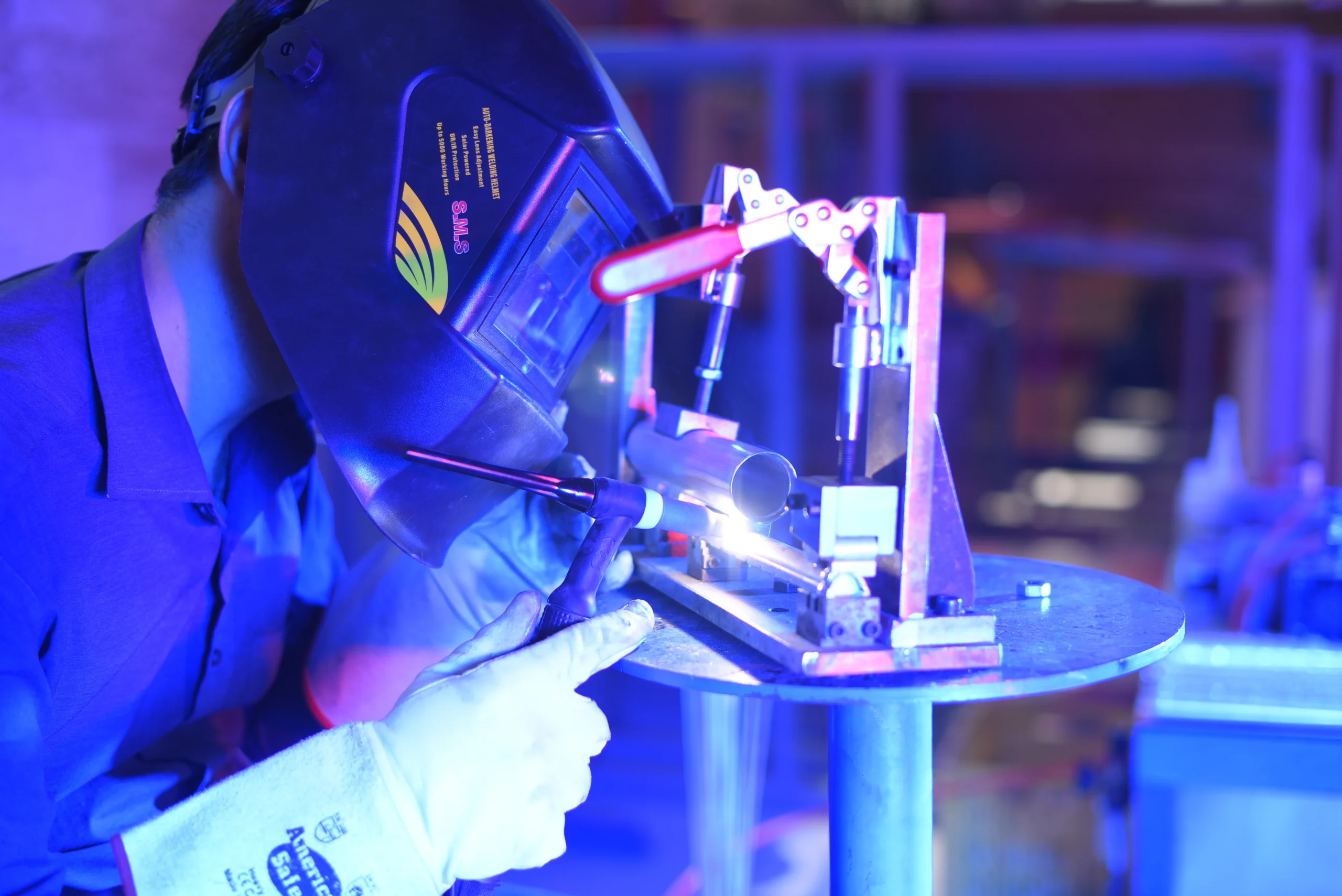
In aluminum production, for example, parameters such as billet and die temperature, extrusion ratio, press speed, cooling conditions, and heat treatment can directly affect final product quality. Understanding the relationship between these parameters and defects, mechanical properties, surface quality, dimensional accuracy, and productivity is an important part of process development.
The objective is not simply to eliminate a specific defect. The aim is to identify its root cause and establish process conditions that deliver more stable quality, lower scrap, and greater repeatability.
Connecting Material and Process
In many development projects, understanding material behavior is critical. Changes in chemical composition, microstructure, heat treatment, and forming conditions can significantly influence final product properties.
For this reason, R&D activities in aluminum are closely connected to metallurgical and process studies. Alloy selection, microstructural evaluation, analysis of hardness and mechanical properties, and assessment of heat-treatment effects can all form part of the development process.
Data generated through chemical, mechanical, and metallographic testing can then be used to establish relationships between manufacturing conditions and product performance.
This approach allows development decisions to be based on actual data, moving process improvement beyond assumptions and experience alone.
Heat Exchanger Development and Microchannel Technology
In thermal management systems, R&D focuses on areas such as heat exchanger design and optimization, fluid-flow path geometry, heat transfer performance, and manufacturability.
For tubes and microchannel products, dimensions, wall thickness, cross-sectional geometry, manufacturing accuracy, and heat transfer characteristics must be considered together.
Design, prototype manufacturing, performance testing, and results analysis form an iterative development cycle. Test results may lead to modifications in product design or manufacturing processes, and the cycle continues until the required performance and production capability are achieved.
R&D therefore extends beyond geometric design to address both real-world product performance and industrial manufacturability.
Forging Engineering and Forming Process Development
In forged component production, part geometry, material, forming stages, die design, and equipment capacity are closely interconnected. Developing a new forged component therefore requires the product and manufacturing process to be considered simultaneously.
Depending on the project, die design and optimization, process simulation, forming-path analysis, material selection, and manufacturability assessment can be performed before physical prototyping.
Simulation and process analysis help identify potential design issues and manufacturing challenges before they reach the production stage. Subsequent production and component testing provide further data that can be used to refine die design, process conditions, or downstream operations.
This approach moves component development from a purely empirical process toward a more structured and engineering-driven methodology.
Making Better Decisions Before Manufacturing
The more product behavior can be evaluated before physical production, the lower the likelihood of costly modifications at later stages of development.
For this reason, engineering analysis and simulation tools are used in selected automotive component development projects. Areas of analysis may include stress and strain, component behavior under loading, fatigue, deformation, impact, and opportunities for weight reduction.
Simulation does not replace physical testing. Instead, it provides a basis for better decisions before manufacturing and helps reduce unnecessary development iterations. Final validation still requires prototyping, testing, and evaluation against real manufacturing data.
Bridging the Gap Between Concept and Production
One of the most important stages of R&D is turning a design into a physical prototype. A concept may appear suitable on paper or in a software environment, yet encounter limitations related to materials, processes, tooling, or equipment during manufacturing.
Prototyping therefore provides an opportunity to evaluate the design and manufacturing process together. The resulting prototype is subjected to the required tests, and the results are compared against the target specifications.
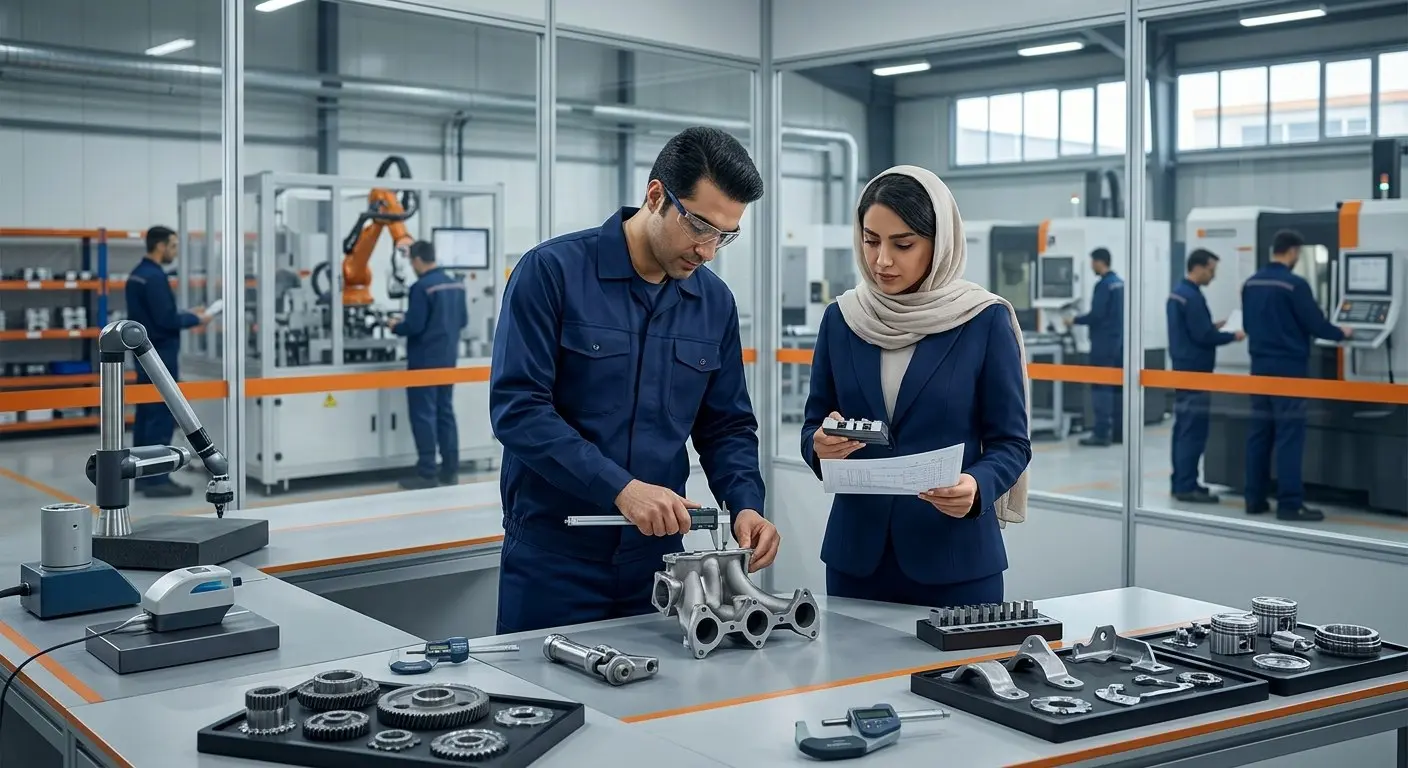
The laboratory plays an important role at this stage. Tensile and hardness testing, chemical composition and microstructural analysis, dimensional inspection, non-destructive testing, and functional testing of components can all form part of the validation process.
The resulting data enables the development team to determine how closely the product or process meets the defined targets.
From Prototype to Series Production
R&D reaches its industrial objective when a developed solution can move beyond the prototype stage and into stable production.
At this stage, the manufacturing process must be documented and repeatable, critical parameters must be identified, quality control methods must be defined, and the requirements of series production must be addressed.
For automotive projects, this process may be supported by methodologies such as APQP and design and process validation, ensuring that the product is evaluated against customer requirements, manufacturability, and quality expectations.
The outcome of R&D is therefore not simply a prototype or engineering drawing. Ultimately, it must lead to an industrial process that is practical, controllable, and repeatable.
Reducing Scrap and Improving Productivity
Another important objective of R&D is improving process efficiency. Reducing scrap, shortening production cycles, optimizing material consumption, minimizing rework, and increasing process stability can all become the focus of development projects.
In such projects, production data, quality-control results, and feedback from technical teams are analyzed together to identify the primary sources of waste and inefficiency.
A small change in a process parameter, tooling design, heat-treatment condition, or inspection method can sometimes have a significant impact on quality and productivity. The value of R&D in these situations lies in identifying such high-impact factors and converting them into stable, repeatable practices.
A Key Input to Development
Industrial development cannot be complete without a clear understanding of customer needs. Changes in technical specifications, demand for new products, improved performance, weight reduction, greater durability, or changing application conditions can all trigger an R&D project.
Customer feedback and information from real-world product applications must therefore be transformed into actionable data and incorporated into product design, manufacturing processes, and improvement programs.
This connection ensures that product development is not driven solely by internal capabilities, but remains aligned with the actual needs of the market and industry.
R&D as a Continuous Cycle
R&D is not a one-time project with a fixed endpoint. Even after a product enters production, process data, test results, manufacturing issues, and customer feedback can feed back into the development cycle.
The cycle begins with identifying a problem or need, followed by design and feasibility assessment, simulation, prototyping, testing, validation, and industrialization. Once the product enters production, real-world data can again be used to identify opportunities for further improvement.
This approach transforms R&D from an isolated activity into an integral part of the organization’s continuous learning system.
From Knowledge to Industrial Capability
At Apadana Dian Industrial Group, R&D operates at the intersection of product, material, process, and market. From optimizing aluminum processes and developing engineered profiles to designing and improving heat exchangers, engineering forging and dies, developing automotive components, and optimizing manufacturing processes, each development project is built around a real industrial challenge and a defined objective.
For us, R&D creates value when engineering knowledge and experience can be translated into measurable results: better-performing products, more stable processes, lower scrap, higher quality, or new ways of addressing industrial needs.
Ultimately, the outcome of R&D is more than a new idea. It is the ability to solve problems, develop products, and build new industrial capabilities.