

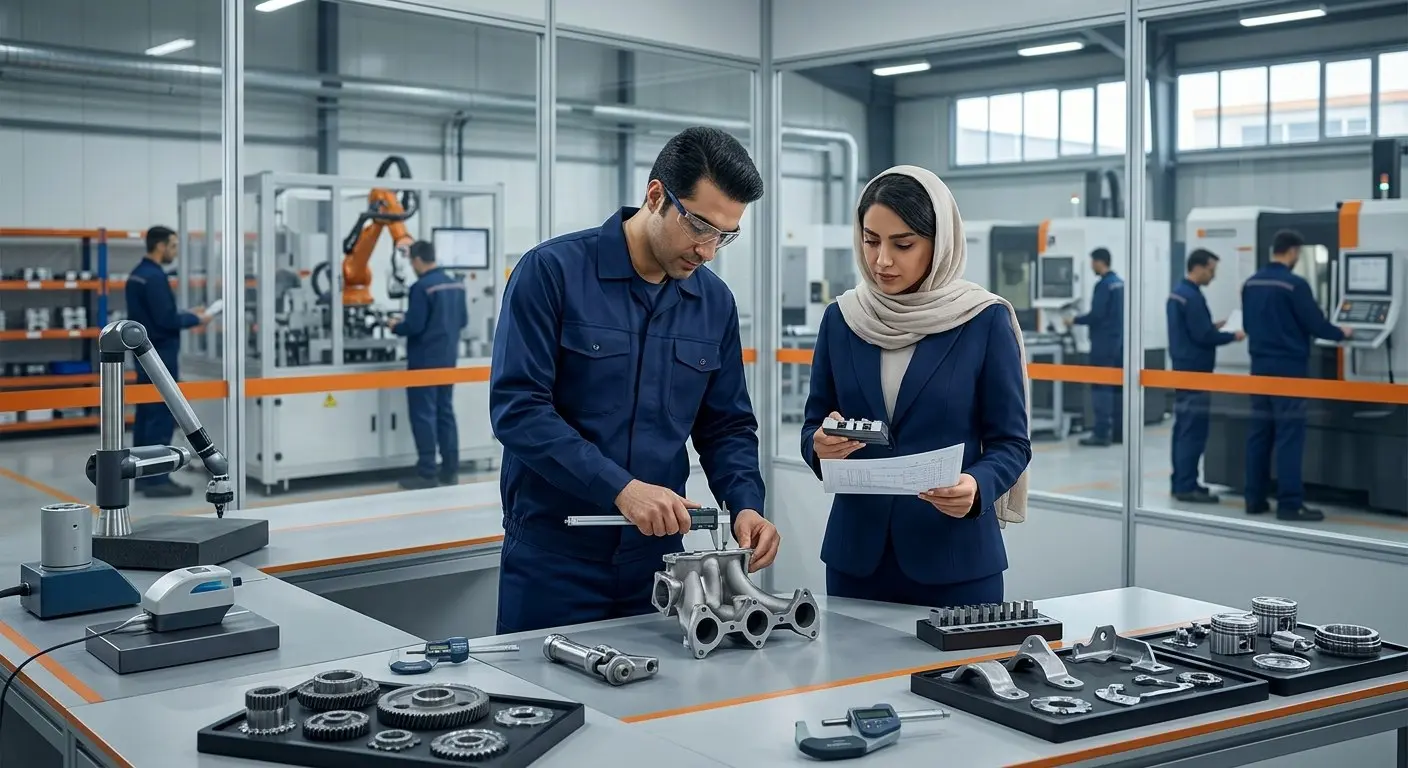
Manufacturing and Development of Engineered Components
Manufacturing industrial components—particularly those involving complex geometries, defined mechanical properties, or specific performance requirements requires far more than access to a set of production machines. A component can reliably enter an industrial supply chain only when its entire journey, from design and feasibility assessment through material selection, tooling, forming, heat treatment, machining, finishing, quality control, and documentation, is defined as one integrated process.
At Apadana Dian Industrial Group, part of the Group’s industrial capabilities has been developed around this approach: creating a pathway that can transform an idea, engineering drawing, or prototype into a component that is manufacturable, controllable, and suitable for repeatable production.
These capabilities are particularly evident in aluminum components, forging and forming processes, die design and manufacturing, machining, and secondary processes areas that serve a broad range of applications, from automotive and mechanical equipment to oil, gas, petrochemical industries, and specialized industrial components.
Quick Link
Jump directly to key sections of this article for a faster overview.
Explore Our Capabilities
Discover Apadana Diyan’s integrated manufacturing capabilities, engineering expertise and industrial solutions.
Engineering Input Assessment
Operating Condition Analysis
Industrial Feasibility
Production Route Planning
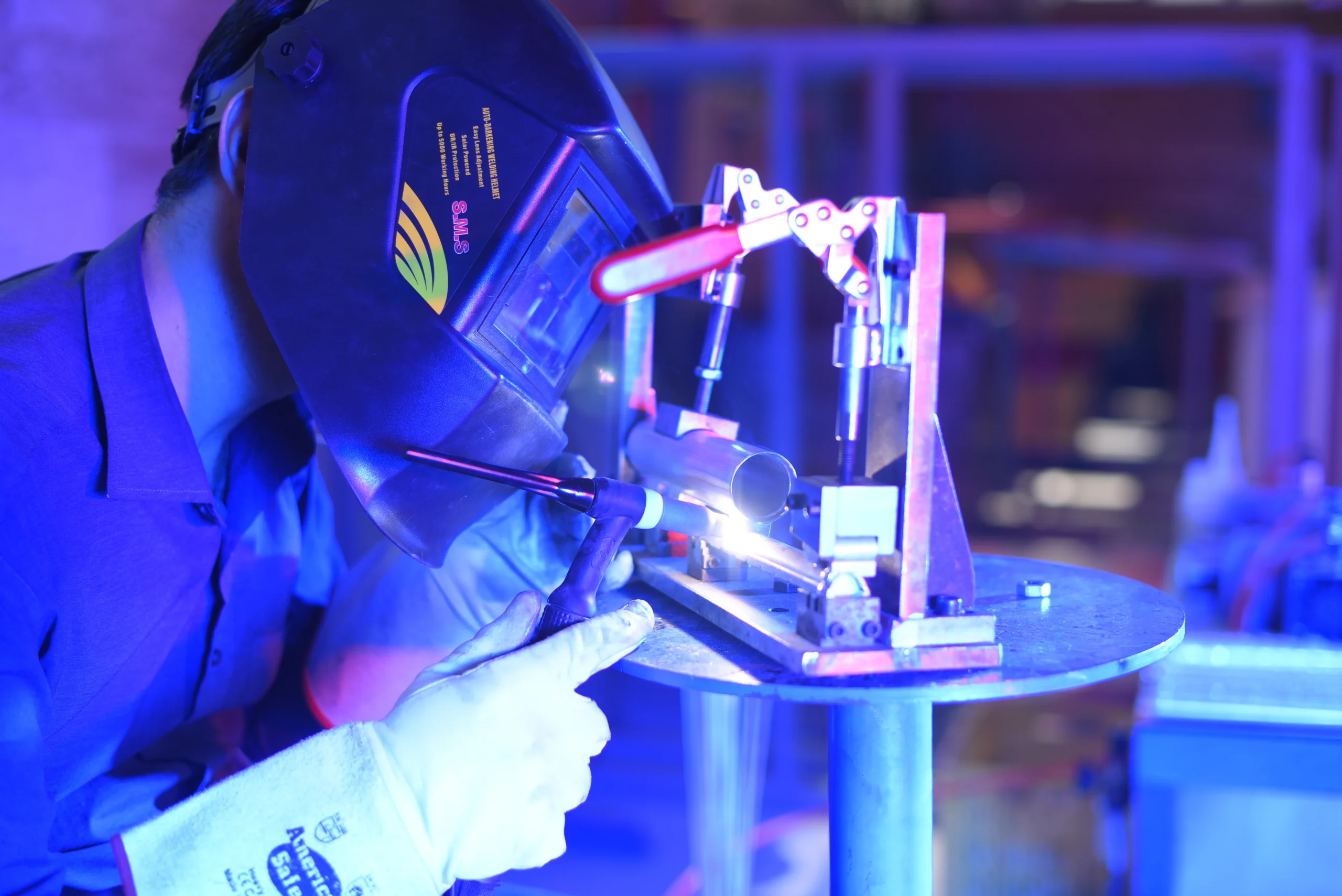
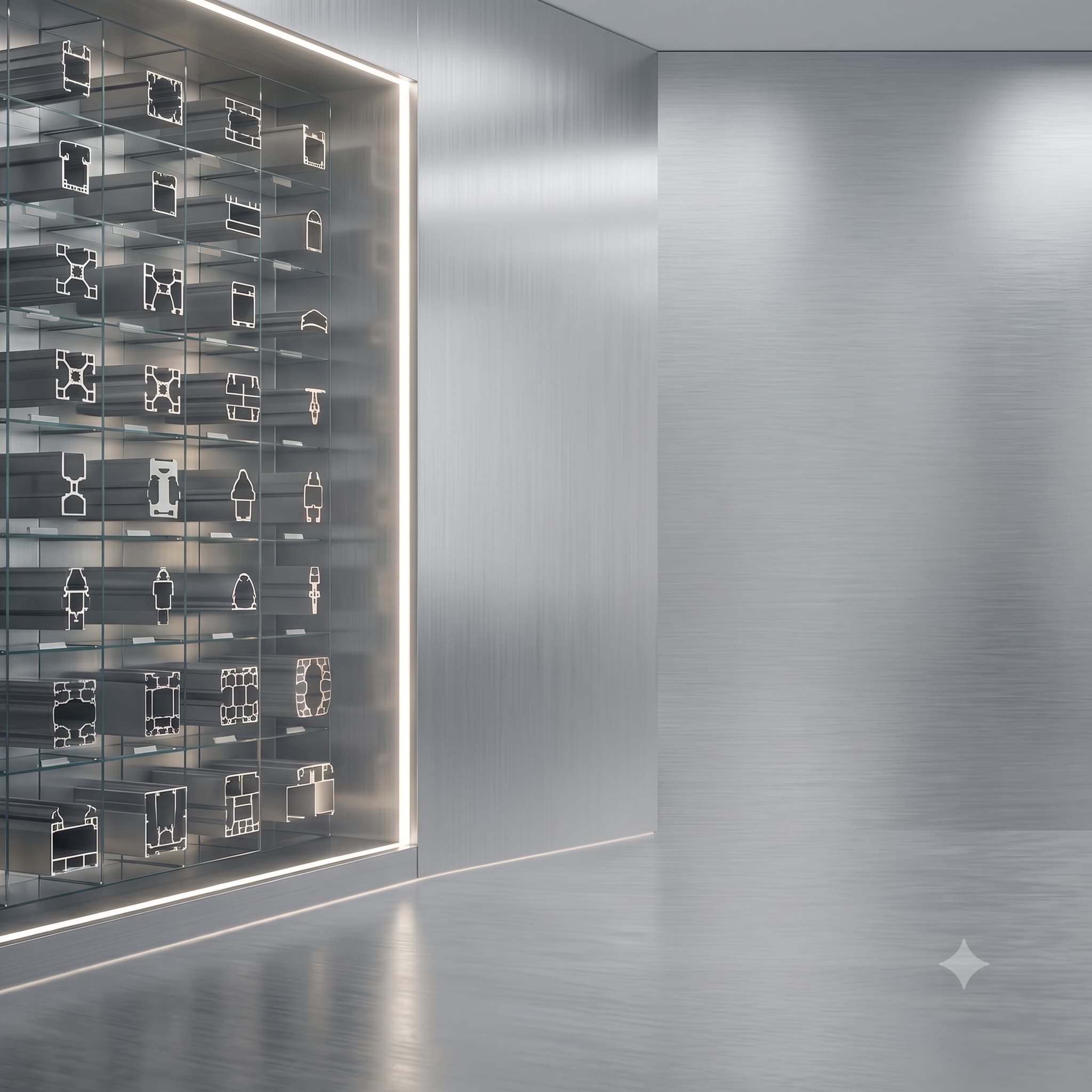
The Foundation of a Manufacturable Component
In industrial projects, design is not limited to creating a three-dimensional model. The design must be directly connected to the realities of manufacturing.
At Asin Forge, component and tooling design and engineering are among the core areas of activity. Three-dimensional modeling, engineering drawings, forging and flange die design, process analysis, and manufacturability assessment form part of this capability.
Where a physical component already exists, reverse engineering can also be used to capture its geometry and generate the technical information required for development.
The ultimate objective is to align component design with manufacturing process design—to establish how the component will be produced, which stages are required, and what tooling will be needed.
Controlled Forming of Aluminum Alloys
Aluminum forging is a manufacturing process capable of producing components with diverse geometries and defined mechanical properties.
Successful forging depends on the appropriate selection of raw material preparation, forming temperature, die design, press capacity, number of forming stages, and process conditions for each component.
At Asin Forge, forging processes can be engineered and implemented from material preparation through final component production. Depending on the component geometry and technical requirements, the process may be designed around one to three die-forming stages.
Hydraulic presses ranging from 200 to 2,000 tons provide flexibility for a variety of projects. The actual production capability for any given component, however, depends on factors such as alloy, component weight, geometry, number of forging stages, production cycle, and die design.
This flexibility in equipment and process selection allows the manufacturing route to be determined according to the actual characteristics and requirements of each component.
Turning Engineering Design into a Physical Product
In many forming processes, product quality depends significantly on die design and manufacturing.
Die geometry must be coordinated with the final component shape, material flow, number of forming stages, and equipment capacity. An unsuitable design can lead to increased material consumption, defects, additional production stages, or reduced die life.
For this reason, die design is treated as an integral part of product engineering rather than as a separate activity.
In-house die design and manufacturing also provide the flexibility to modify and optimize tooling based on production results when required. This iterative approach is particularly valuable in new product development and the industrialization of new components.
From Forming to Heat Treatment
After forming, many industrial components require thermal processing to achieve their target material properties.
For aluminum components, heat treatment can be used to achieve the required balance of strength, hardness, ductility, and dimensional stability.
Within the Asin Forge manufacturing chain, processes such as annealing, stress relieving, and T4 and T6 heat treatments can be integrated with the forming process.
The importance of this stage lies in ensuring that the component meets project requirements not only in terms of geometry, but also in terms of material properties.
Achieving the Final Geometry
For many forged or formed components, the initial geometry does not represent the final product geometry. Surfaces, holes, connection points, and other precision features may require subsequent machining.
At this stage, CNC machining, turning, milling, drilling, and other machining processes can be used to achieve final dimensions and tolerances.
The relationship between forming and machining is particularly important. When subsequent machining operations are considered from the beginning of component design, material removal, material consumption, and production time can be controlled more effectively.
In an integrated manufacturing chain, component design, die design, and machining planning are therefore developed as connected elements rather than isolated activities.
More Than a Final Step
Following forming and machining, certain components may require additional finishing or secondary processes.
Depending on the product and its intended application, processes such as anodizing, surface treatment, finishing, stress relieving, heat treatment, flow forming, and other secondary forming operations may be incorporated into the manufacturing route.
Each process must be selected according to the component’s final application. For components exposed to environmental conditions or corrosion, for example, the appropriate surface treatment can have a direct impact on durability and performance.
These processes must therefore be considered from the design stage and aligned with the component’s intended use.
An Integral Part of Manufacturing
Quality control throughout this chain is not limited to final product inspection. Raw material verification, process monitoring, dimensional inspection, and mechanical property evaluation at different stages help identify nonconformities before the product reaches completion.
For forged and machined components, dimensional and tolerance control is particularly important, as geometric variation can affect assembly and functional performance.
Documenting inspection results also contributes to traceability and repeatability, providing a reliable record of the manufacturing process and its outcomes.
From Manufacturing Challenges to New Solutions
The development of a new component does not necessarily end with the first successful production run. Initial prototypes may reveal the need to modify geometry, change the alloy, optimize tooling, or reduce material consumption.
At Asin Forge, R&D activities include forging process optimization, die design and modification, pre-production simulation, reverse engineering, and new product development. Feeding manufacturing experience back into the design process enables progressive product refinement and improved process stability.
From Prototype to Industrial Production
One of the critical stages in industrial projects is converting a prototype into a repeatable production process.
A component that has been successfully manufactured once is not necessarily ready for continuous production. For industrial manufacturing, the production method, tooling, quality controls, and documentation must be defined in a way that consistently delivers the required result.
The transition from prototype development and initial evaluation to design and process refinement and, ultimately, series production is therefore an essential part of industrialization.
One Chain, Multiple Capabilities
At Apadana Dian Industrial Group, capabilities including engineering and design, material preparation, forging and forming, die design and manufacturing, heat treatment, machining, secondary processes, and quality control are brought together as complementary elements of an integrated manufacturing chain.
These capabilities support projects across automotive, mechanical equipment, industrial components, valves, and selected oil, gas, and petrochemical applications.
From Design to Finished Product
Reliable industrial component manufacturing depends on the connection between every stage of the process from understanding the initial requirement and developing the design to material selection, die design, forming, heat treatment, machining, secondary processes, quality control, and documentation.
Apadana Dian Industrial Group approaches this chain as a set of complementary capabilities designed to do more than manufacture a component. The objective is to create a controlled and repeatable pathway for transforming an industrial requirement into a product that can be manufactured, evaluated, and consistently reproduced.