

An Integrated Chain for Aluminum Products
For many industries, aluminum is far more than a raw material. It is an engineering material whose alloy selection, manufacturing method, profile geometry, heat treatment, and even process control directly influence the performance of the final product. For this reason, producing a high-quality aluminum product does not begin when it leaves the extrusion line. It begins with chemical composition and process design and continues through the control of mechanical properties, metallurgical structure, dimensions, and compliance with customer requirements.
At Apadana Dian Industrial Group, our aluminum activities are built around this approach. The production chain brings together material preparation and billet production, die design and manufacturing, extrusion, heat treatment, secondary processes, quality control, and technical problem-solving as interconnected stages of a single manufacturing system.
Quick Link
Jump directly to key sections of this article for a faster overview.
Explore Our Capabilities
Discover Apadana Diyan’s integrated manufacturing capabilities, engineering expertise and industrial solutions.
Chemical Composition
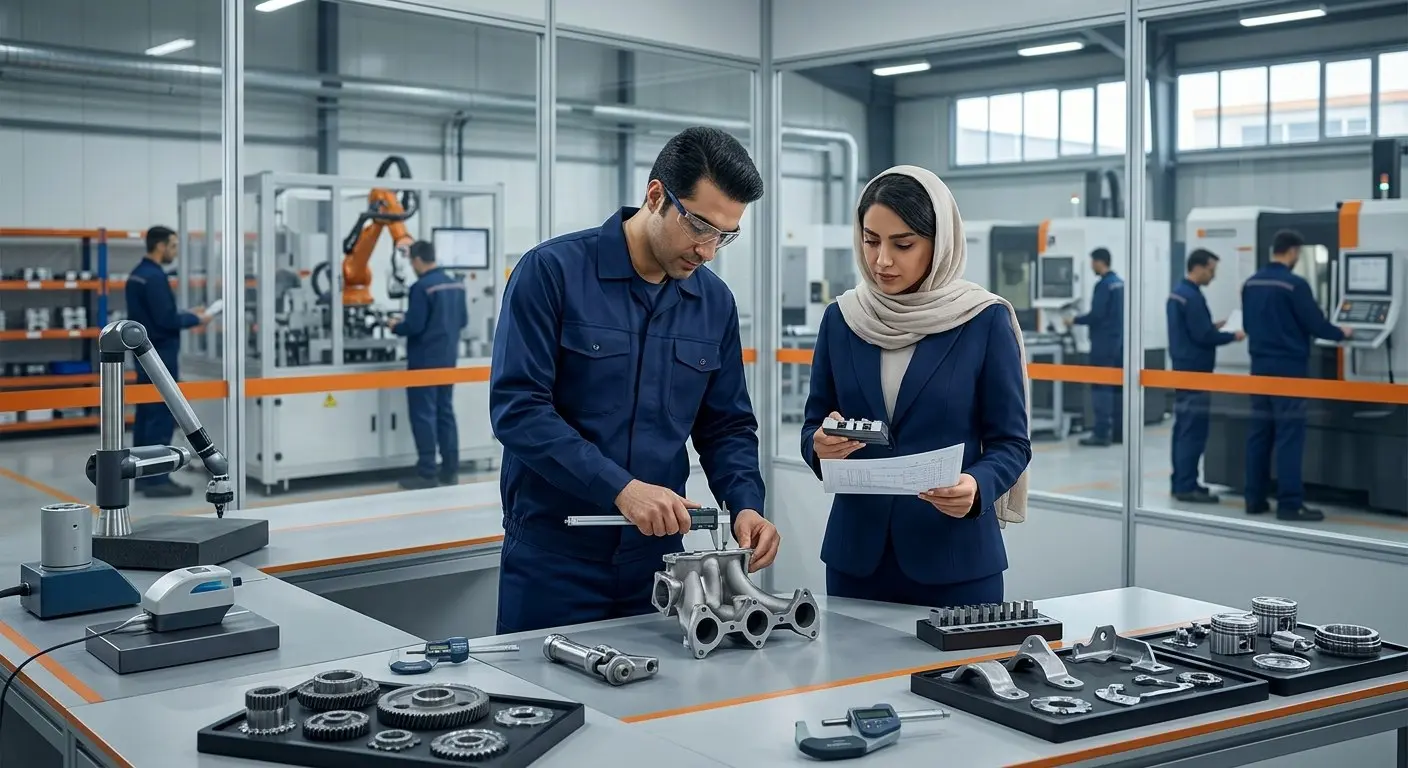
Dimensional Control
Mechanical Testing
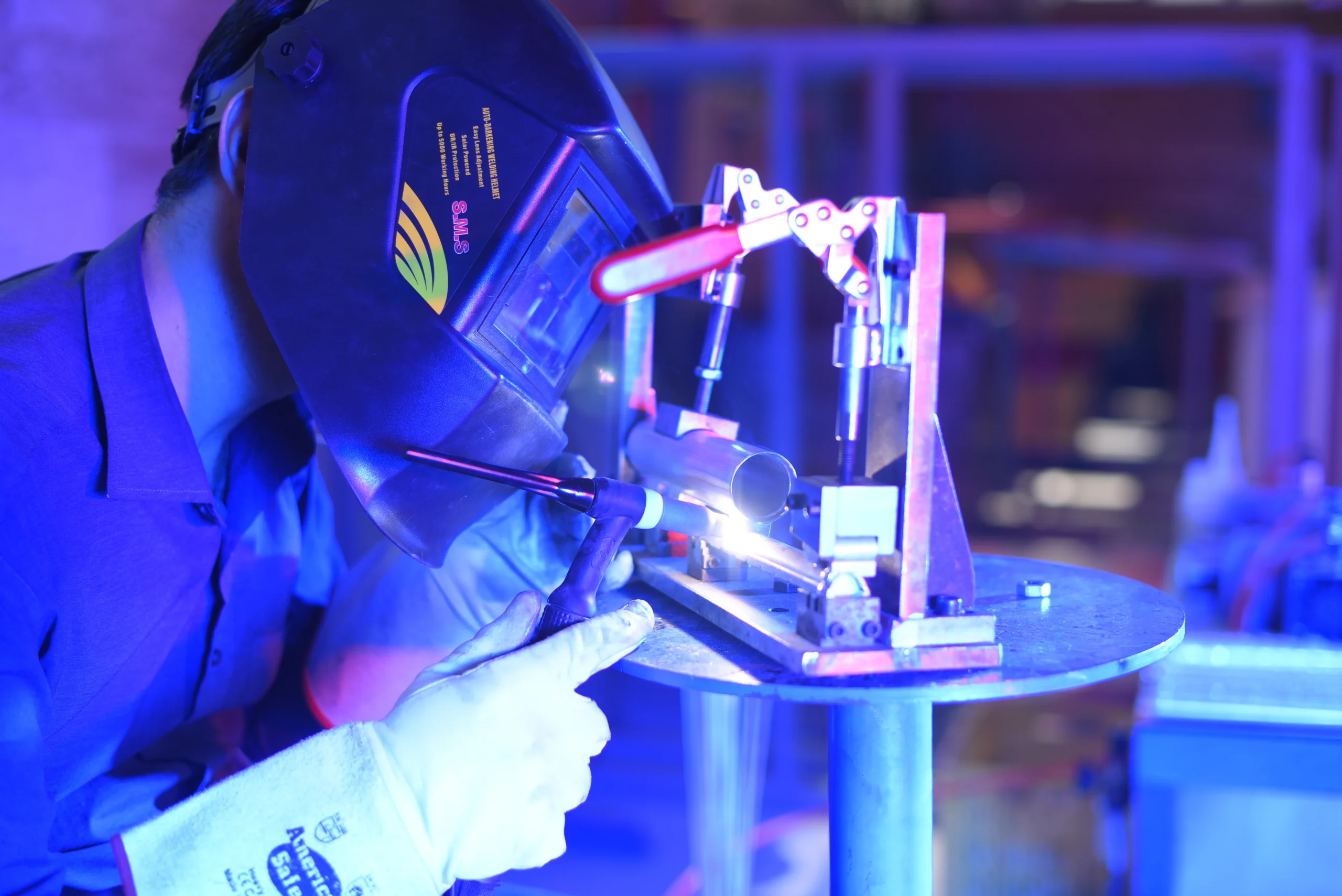
Metallurgical & NDT
Process Control from the Start
One of the strengths of the Group's aluminum manufacturing chain is the ability to perform a significant portion of the production process within the Group. Aluminum billets are produced using casting furnaces and subsequently undergo homogenization to prepare the material for extrusion.
Billet homogenization is more than a simple thermal treatment. Its purpose is to promote a more uniform metallurgical structure, reduce chemical segregation, and prepare the alloy for subsequent processing. The quality of this stage can directly influence material behavior during extrusion and, ultimately, the properties of the finished product.
The ability to produce billets in different sizes and alloy compositions also provides greater flexibility in responding to diverse production requirements. Alloy selection and billet specifications are determined according to the intended application, product geometry, and required material properties.
Turning Alloy into Engineered Profiles
Extrusion is one of the primary aluminum forming processes within this chain. In this process, a prepared billet is forced through a die under controlled conditions to produce the required profile geometry.
However, extrusion quality depends on far more than press capacity. Billet temperature, container and die temperature, extrusion ratio, press speed, cooling conditions, and die geometry are among the parameters that must be controlled according to the alloy and product specifications. Technical standards for solution treatment of extruded alloys likewise emphasize the importance of controlling key process parameters throughout extrusion and subsequent heat treatment.
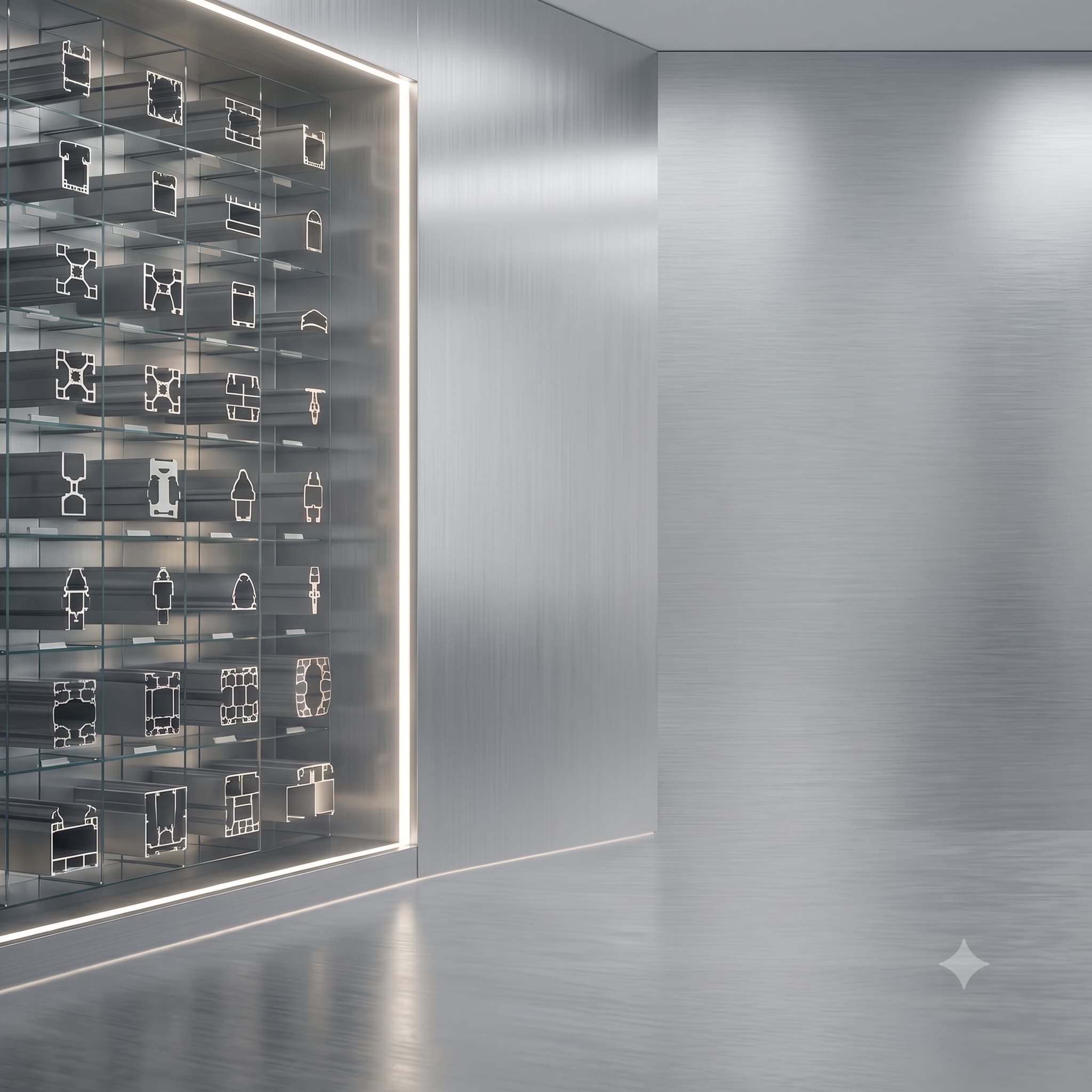
At Apadana Dian Industrial Group, this process-oriented approach is applied to the development of aluminum products. The capability to produce solid profiles, bars, tubes, hollow sections, and specialized engineered profiles in a range of geometries and dimensions allows the extrusion process to be designed and adjusted according to the characteristics of each product.
Another important part of this chain is extrusion die design and manufacturing. In-house die engineering and manufacturing not only reduce dependence on external suppliers, but also enable faster die modification and development and a more responsive approach to specific customer requirements—particularly when profiles involve complex geometries or demanding dimensional specifications.
Where Material Properties Are Developed
The product leaving the extrusion press is not necessarily the finished product. For many aluminum alloys, achieving the required mechanical properties depends on an appropriate heat treatment cycle.
At this stage, parameters such as solution treatment temperature, holding time, transfer time, quenching rate, and aging conditions must be controlled according to the alloy and the required properties. ASTM B807/B807M also emphasizes the control of parameters such as billet temperature, container temperature, ram speed, extrusion exit temperature, and quench rate in the solution treatment of extruded 6xxx and 7xxx series alloys.
Within this manufacturing chain, different heat treatment cycles and tempers such as T4, T6, T7, T8 and T9 can be applied according to the alloy and product requirements. This enables the required balance between strength, hardness, elongation, and dimensional stability to be achieved.
The importance of this stage becomes even more apparent when the product is intended for an automotive or industrial assembly operating under defined loads, pressure, vibration or environmental conditions. In such applications, mechanical properties must be considered part of the product and manufacturing process not simply a characteristic measured at the end.
Moving Closer to the Customer's Final Requirements
Following extrusion and heat treatment, additional processes may be required depending on the product and its technical specifications.
Cold drawing, straightening, cutting, and dimensional inspection can be incorporated into the production route to achieve the required dimensions, tolerances, and final condition of the product.
At this stage, the objective is not simply to produce an aluminum profile. The product must meet its defined requirements in terms of geometry, dimensions, mechanical properties, surface quality, and technical specifications.
Turning Customer Requirements into a Manufacturing Process
Part of Apadana Dian Industrial Group's aluminum capability is focused on engineering and process development.
For a new project, the required product characteristics are first defined—from alloy grade and billet dimensions to profile geometry, tolerances, mechanical properties, and operating conditions. Extrusion parameters, die design, and heat treatment cycles are then established and optimized according to these requirements.
Throughout this process, issues such as cracking, surface defects, segregation, variations in mechanical properties, dimensional distortion, or internal discontinuities can be investigated.
Metallurgical engineering in this context is not limited to identifying defects. The objective is to understand cause-and effect relationships: how changes in chemical composition affect material properties, how extrusion parameters influence structure, how heat treatment changes hardness and strength, and where the source of a surface or internal defect lies within the manufacturing process.
From Process Optimization to New Products
Research and development is another part of the aluminum manufacturing chain. Development of new profiles, extrusion process optimization, scrap reduction, productivity improvement, refinement of heat treatment cycles, and response to customer-specific requirements are among the areas that can be addressed through R&D activities.
When developing a new product, achieving the desired shape alone is not sufficient. The product must also be evaluated for industrial manufacturability, mechanical properties, surface quality, dimensional tolerances, and process repeatability.
An Integrated Chain for Industrial Requirements
What defines Apadana Dian Industrial Group's aluminum activities is not a collection of individual machines, but the connection between different stages of manufacturing and engineering.
From billet production, preparation, and homogenization to die design and manufacturing, extrusion, heat treatment, drawing and straightening, cutting, dimensional inspection, mechanical and metallurgical testing, and non-destructive evaluation, each stage forms part of an interconnected manufacturing chain.
This chain enables aluminum to move from a raw material to an engineered product with defined and controlled characteristics. Depending on industry requirements, these products can range from profiles and tubes to specialized sections and components used across industrial and automotive supply chains.
For Apadana Dian Industrial Group, working with aluminum means more than producing a metal profile. It means engineering the material, process, and product as parts of an integrated manufacturing chain—one designed to support stable, controllable, and reliable production while creating greater capacity to develop products tailored to evolving industrial requirements.